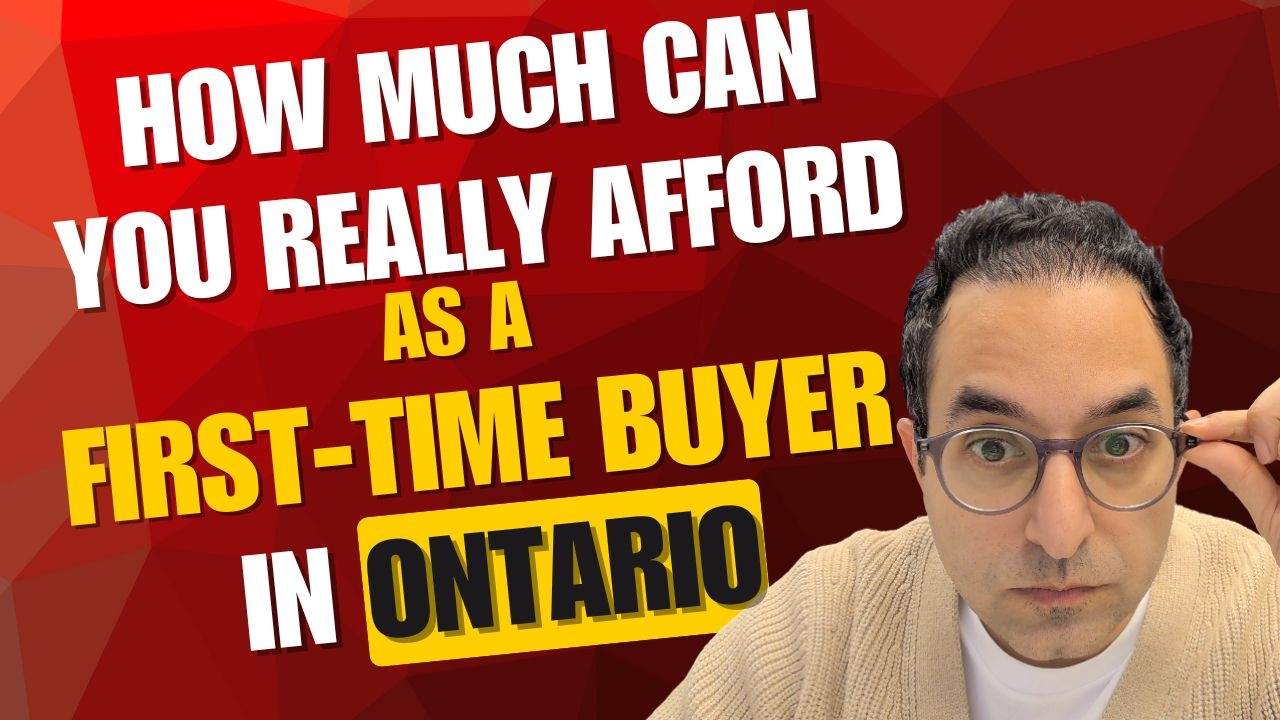
If you’re a first-time home buyer in Ontario, one of the biggest questions you’re probably asking yourself is:
“How much home can I actually afford?”
Not what an online calculator shows.
Not the maximum a bank is willing to approve.
But what truly makes sense for your life, your budget, and your long-term comfort.
In this article, I’ll walk you through how affordability really works for first-time buyers in the GTA, using realistic examples from Toronto and Vaughan, and highlighting the biggest mistake I see buyers make before they even speak with an agent.
The Biggest Mistake First-Time Buyers Make Early On
The most common mistake I see isn’t choosing the wrong home or the wrong neighborhood.
It happens much earlier.
Most first-time buyers start their search by looking at purchase prices instead of monthly costs.
They browse listings, use quick mortgage calculators, and settle on a number like:
“I think I can afford around $750,000.”
The problem is that this number, on its own, doesn’t mean much.
Two homes with the same price can feel completely different financially once you factor in condo fees, property taxes, maintenance, utilities, and future interest rate changes.
This often leads to one of two outcomes:
- Buyers stretch themselves too far and feel financial pressure later
- Or they underestimate their options and delay buying longer than necessary
Neither is ideal.
What “Affordability” Actually Means
Here’s an important distinction most people don’t hear enough:
Banks qualify risk. Buyers live the payment.
Lenders focus on income, debt ratios, and stress tests.
They don’t account for your lifestyle, savings goals, family plans, or personal comfort level.
True affordability is not about the maximum loan you can qualify for.
It’s about the monthly payment you can handle comfortably, even if rates rise or expenses change.
Real affordability includes:
- Mortgage payments
- Property taxes
- Condo fees or home maintenance
- Utilities and insurance
- And room for future life changes
This is where many online calculators fall short — they don’t see the full picture.
Why Monthly Costs Matter More Than Purchase Price
Let’s look at a simplified example.
Imagine buying a $700,000 condo with 5% down.
While the mortgage payment might look manageable on paper, the full monthly picture could include:
- Mortgage payment
- Condo fees
- Property taxes
- Utilities and insurance
Suddenly, the total monthly cost is much higher than expected.
This gap between “mortgage payment” and “actual monthly cost” is where many first-time buyers feel surprised — and sometimes overwhelmed — after they’ve already committed.
Understanding the total cost upfront is key.
Renting vs Buying in the GTA: The Missing Math
Another common conversation is whether renting is cheaper than buying.
In many cases, renting is cheaper on a monthly basis — at least initially.
But here’s what often gets overlooked.
If you’re renting for $3,000 per month, that’s:
- $36,000 per year
- $180,000 over five years
That money is gone.
With homeownership, part of your monthly payment goes toward building equity, and while ownership comes with added responsibilities, it also offers more long-term predictability as rents continue to rise.
The real question isn’t simply:
“Is renting cheaper?”
It’s:
“Where does my money go over time?”
Real First-Time Buyer Examples: Toronto vs Vaughan
Let’s look at two realistic GTA scenarios.
Toronto Condo Example
- Purchase price: approximately $650,000
- Down payment: 5–10%
- Estimated monthly all-in cost: around $4,100
- Typical household income required: roughly $130,000–$140,000
Vaughan Townhouse Example
- Purchase price: approximately $850,000
- Higher property taxes and maintenance
- Estimated monthly all-in cost: $5,000+
- Typical household income required: $160,000–$175,000
Two buyers earning similar incomes can end up with very different options depending on their down payment, debts, and lifestyle priorities.
This is why income alone doesn’t tell the full story.
How First-Time Buyers Should Prepare the Right Way
If you’re planning to buy your first home, here’s the order that works best:
- Determine a comfortable monthly payment, not a maximum price
- Stress-test your budget for higher rates or unexpected expenses
- Decide what trade-offs you’re willing to make
- Then start looking at homes that align with that reality
Starting with clarity saves time, stress, and disappointment later.
Final Thoughts
Buying your first home isn’t about pushing your limits or chasing the biggest mortgage a bank will approve.
It’s about finding a home that supports your life — not one that restricts it.
If you’re a first-time buyer in Ontario and want to make informed decisions, understanding affordability is one of the most important steps you can take.
(You can watch the full video above for a detailed walkthrough and real examples.)